


“Latvian Language Lessons” – a Performance About an Exam, Belonging, and One’s Place in Society

becid
01.09.2026
In the summer of 2026, audiences in Latvia and Lithuania were introduced to “Latvian Language Lessons” (Latviešu valodas stundas) — a sharp, ironic, yet deeply human story about language, belonging, and the feeling that one’s right to be part of society must be proven time and again.
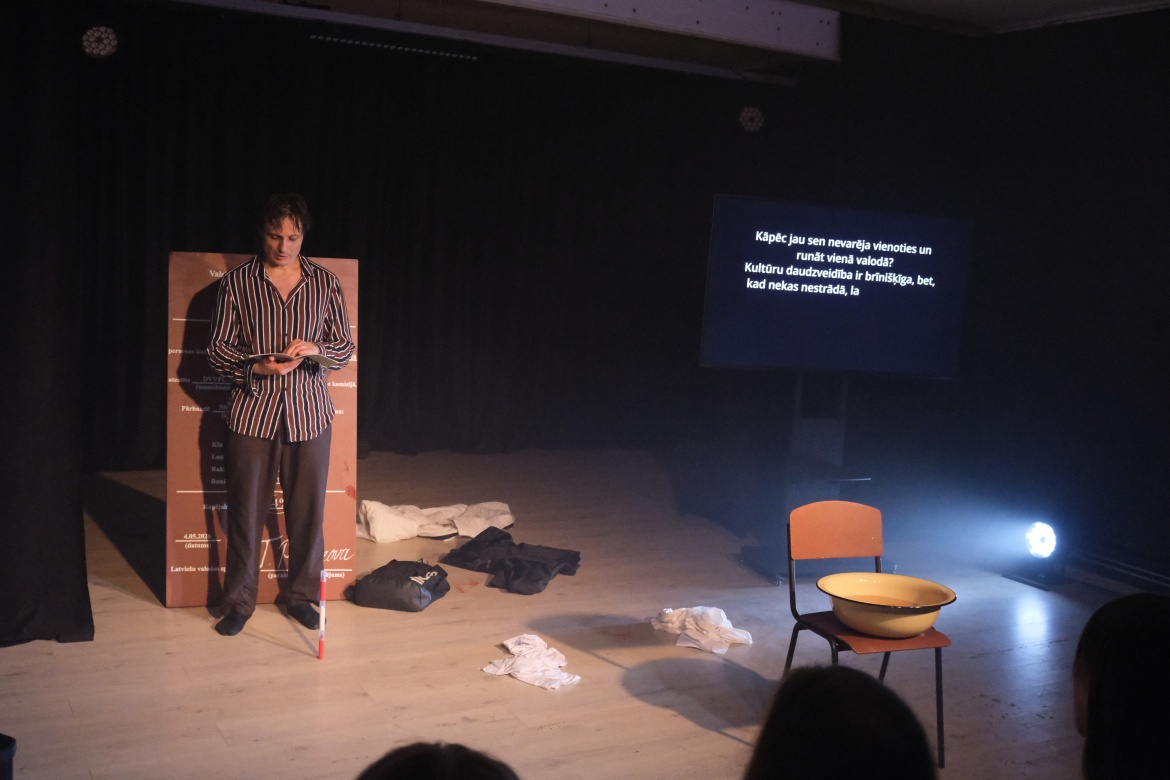
At the centre of the performance is Kolya, a man who was born in Latvia and has lived there all his life, and who is preparing to take the state language proficiency exam. Yet the formal test soon turns into a much more difficult inner examination. Kolya is forced to confront his desire to belong, his fear of failing to meet expectations, and questions about his place in the country he calls home.
“Latvian Language Lessons” is not simply a performance about language. It is a story about an exam and about belonging.
From Daugavpils to Visaginas
The performance began its journey in Daugavpils, at the premises of the New East Cultural Institute, where a dress rehearsal with an audience took place on 8 July, followed by the premiere on 9 July. The very next day, on 10 July, “Latvian Language Lessons” was performed at the LAMPA Conversation Festival in Cēsis. On 13 August, the production crossed Latvia’s border and travelled to Lithuania, where it was presented at the Draugystė Cultural Centre in Visaginas.
Altogether, approximately 325 people attended the performances in person: 80 in Daugavpils, 200 in Cēsis, and 45 in Visaginas.
Participation in the LAMPA Festival was particularly significant. The themes of the performance fit naturally into the festival’s space for discussion, bringing attention to issues that often coexist in Latvian society but do not always meet in open dialogue: identity and language, integration and loneliness, the experiences of ethnic minorities, democratic resilience, the influence of propaganda, and a person’s capacity for change.
When Language Becomes a Boundary
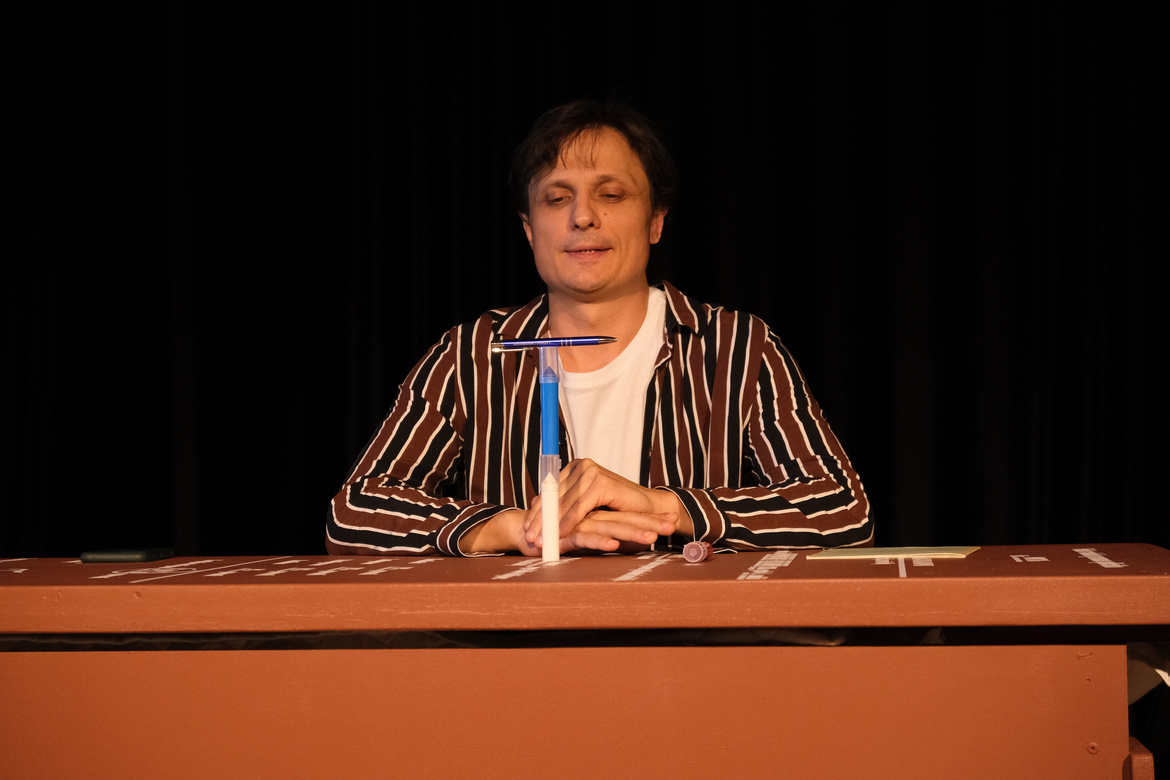
The production deliberately avoids presenting a simplified story of ethnic conflict or a divided society. Instead, it focuses on individual psychological experience and the questions arising from decolonisation – self-respect, belonging, and life in a situation where a person feels subject to constant evaluation.
In the performance, language is not merely a cultural symbol or a source of pride in one’s identity. It also becomes an institutional filter – a boundary between what is “allowed” and “not allowed”, between the feeling of belonging and the need to formally prove that belonging.
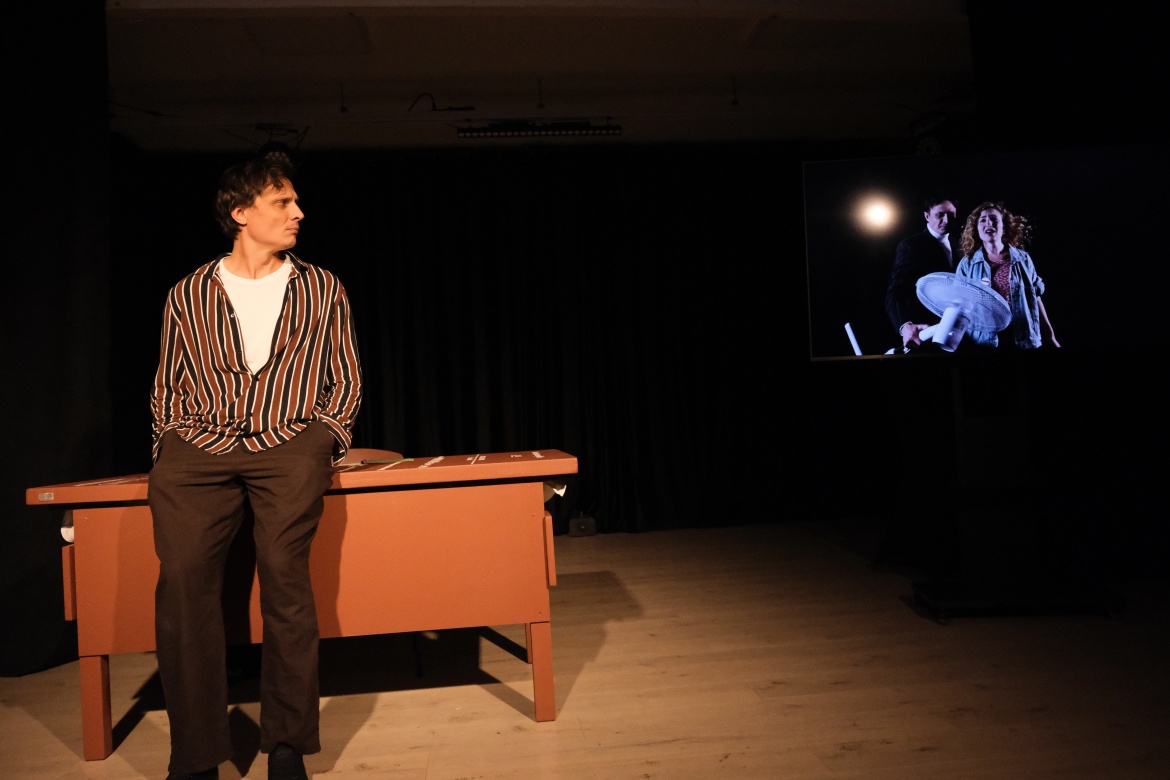
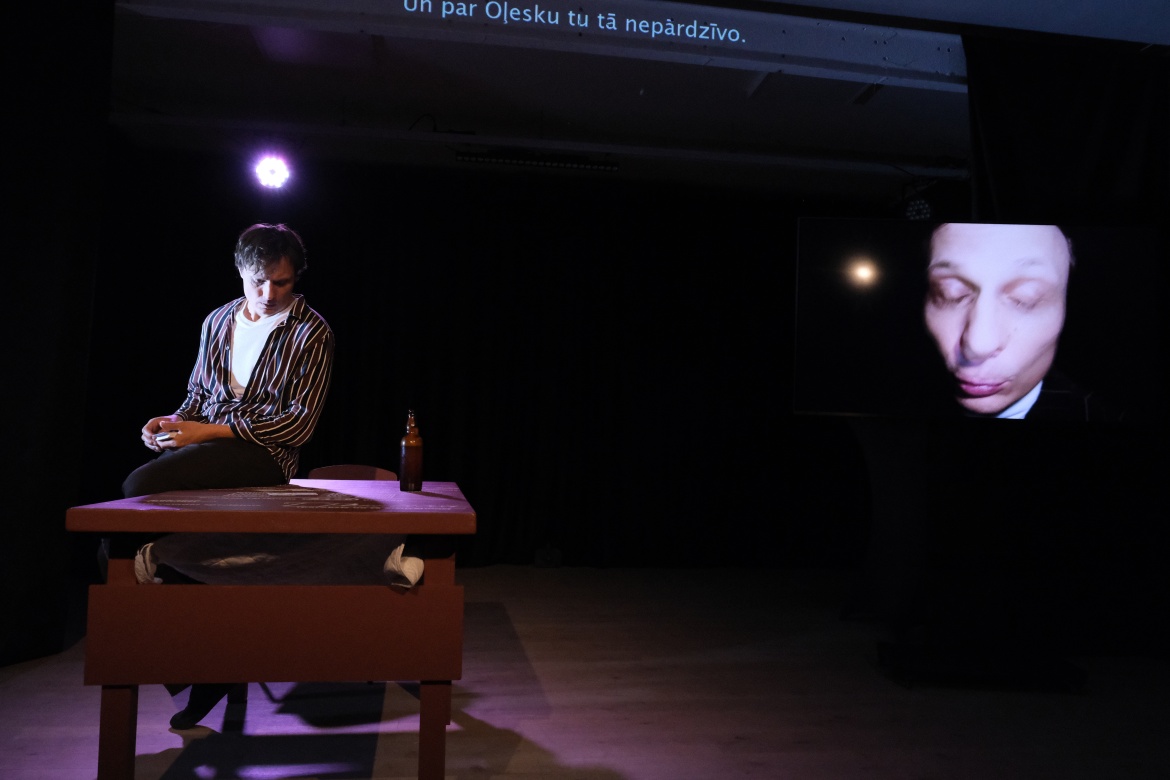
Kolya’s inner voice plays an important role in the performance – ironic, aggressive, humorous, and at times frightening. It provokes and helps him, humiliates him, and brings old grievances back to the surface. This voice becomes a metaphor for the way personal experience, environmental influences, propaganda, stereotypes, and unresolved social conflicts can all coexist within a single person.
It is precisely this tension that allows the performance to address complex issues not through abstract political categories, but through the lived experience of an individual.
The Conversation Continues After the Performance
For the creators of “Latvian Language Lessons”, it was important that the performance should not become a one-way statement. Following the premiere in Daugavpils, an informal conversation took place between the audience and the creative team, offering an opportunity to continue the dialogue that had begun on stage.
After the performances, audience members were also invited to complete a feedback survey. The responses gave the production an average rating of 9.8 out of 10, reflecting an exceptionally positive audience reception.
The production has also gained wider recognition. It has been included in the Latvian School Bag (Latvijas skolas soma) cultural education programme, while the theatre performance catalogue Izrades.lv lists an audience rating of 10.0.
A Performance That Continues to Live in the Public Sphere
“Latvian Language Lessons” has also attracted considerable media attention. A total of 38 publications have been compiled across the Latvian and Lithuanian media landscape and New East’s communication channels, including 25 social media posts, 11 articles, and two video features.
Documentation of the production allows it to continue reaching audiences beyond the live performances. A full video and audio recording of the performance is available, along with photo and video documentation.
Multilingualism is not only one of the themes of the production but also an integral part of its form. “Latvian Language Lessons” is performed in Russian and Latvian, including Latvian spoken with an accent, with subtitles in Latvian, Russian, and English.
The performance runs for 90 minutes. It is not recommended for audiences under the age of 16, as it contains strong language.
Creative Team
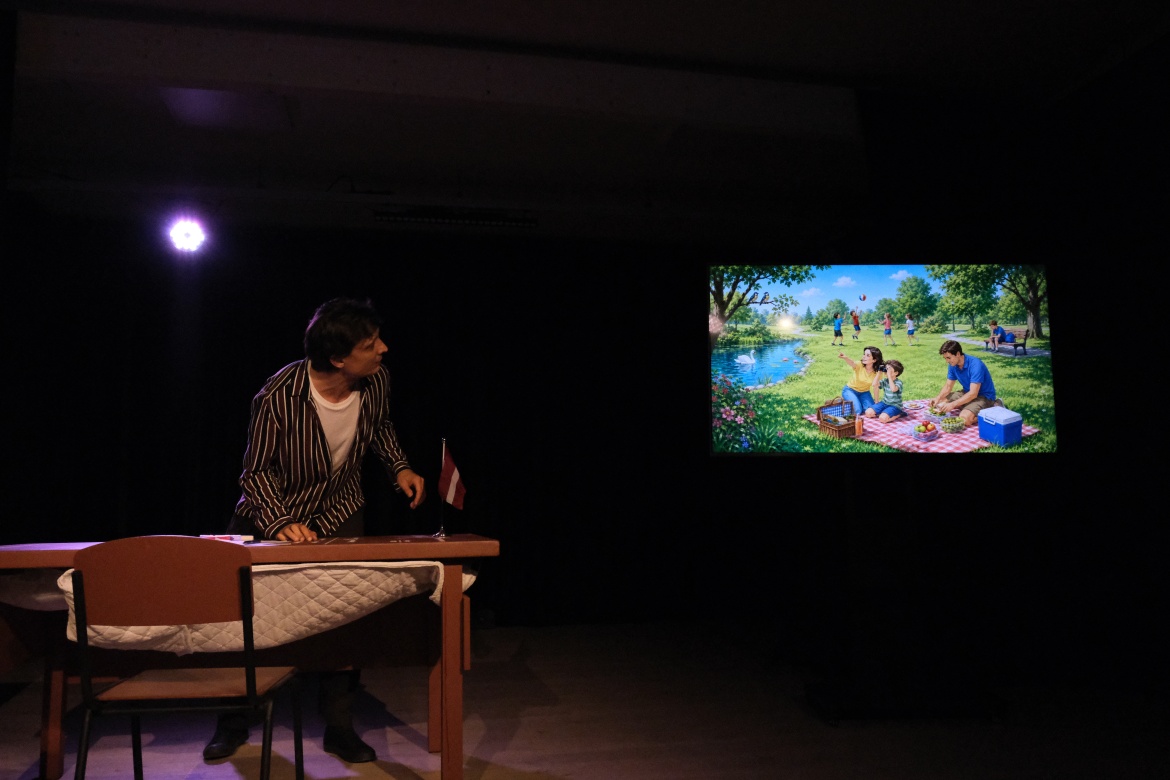
The concept was created by Vadims Bogdanovs, who also performs the leading role. The production is directed by Edvīns Klimanovs, and the play was written by Andrejs Timofejevs.
“Latvian Language Lessons” poses a question with no single or easy answer: what does a person need in order to truly feel that they belong? Language proficiency can be tested in an exam. Far more difficult to measure is the feeling of being accepted — of not having to constantly prove one’s right to be part of the place where one lives.
This is why the story of “Latvian Language Lessons” does not end when the exam is over or when the stage lights go out. It continues in conversations among audience members and in questions about language, identity, historical experience, and the kind of society in which we want to live.
Full performance recording: Watch “Latvian Language Lessons”